California Wildfire Commercial Property Insurance: FAIR Plan, DIC & E&S Options
Coverage Snapshot: Commercial property owners in or near California wildfire zones should review admitted-market status, FAIR Plan eligibility and limits, Difference in Conditions (DIC) structuring, and excess or surplus lines options together, especially after a non-renewal. The right structure depends on total insured value, construction, protection class, completed mitigation work, and current placement status.
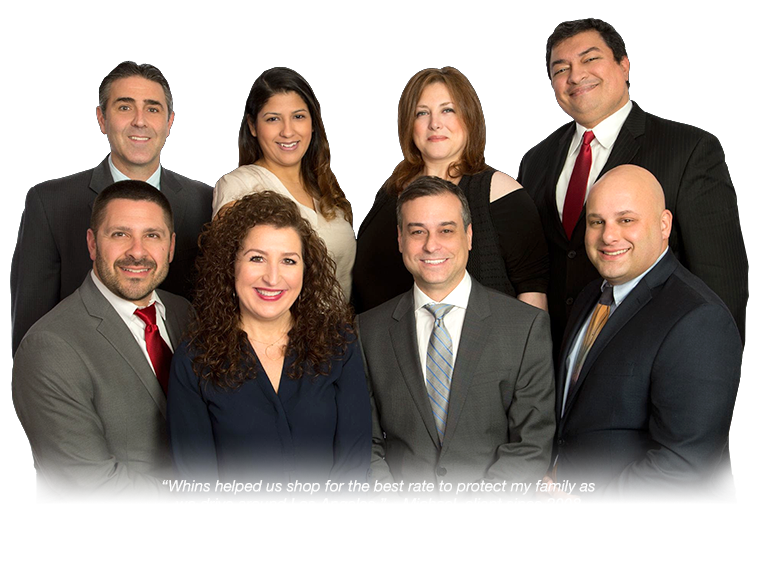
Your WHINS Advisor
Review CA wildfire commercial property insurance with Darren Hasson
Agency Principal / Insurance Advisor
CA License #0F22646 | NPN #8821764.
What insurance exposures should be reviewed first?
For owners of commercial buildings, apartments, HOAs, and other habitational or mixed-use property in wildfire-hazard areas, the first review should usually focus on where the property currently sits in the market and what would happen at the next renewal.
- Non-renewal and market-exit risk: buildings in higher wildfire-hazard areas have seen some admitted carriers reduce or exit capacity, which can push a property toward the FAIR Plan or the surplus lines market.
- FAIR Plan coverage limits: the FAIR Plan’s Commercial High Value program has an insured-value cap per building, and coverage above that cap, or perils the FAIR Plan does not address, typically requires a separate DIC or excess policy.
- DIC / companion-policy structuring: pairing a FAIR Plan policy with a properly matched DIC policy takes coordination so that limits, deductibles, and covered perils line up without unintended gaps.
- Layered E&S excess placement: larger total insured values in high-hazard zones often require multiple layers of surplus-lines capacity rather than a single policy.
- Renewal timing under changing regulation: California adopted new rules affecting when and how certain commercial property policies can be non-renewed starting in 2026, which can change the renewal timeline owners should plan around.
What details do underwriters typically need for a wildfire-exposed commercial property submission?
- Total insured value (TIV) for the building and contents.
- Construction type, roof type and age, and any completed defensible-space or home-hardening mitigation work.
- Protection class and proximity to a fire station or hydrant.
- Current admitted-market status: active policy, non-renewal notice already received, or coverage already placed through the FAIR Plan.
- Occupancy type, including whether the property is habitational, mixed-use, or commercial.
- Prior wildfire or fire-related claims history.
Key terms in California wildfire commercial property insurance
- FAIR Plan Commercial High Value (CHV)
- California’s FAIR Plan program for larger commercial properties, generally used when standard admitted-market carriers decline to write or renew coverage in higher wildfire-hazard areas.
- DIC (Difference in Conditions)
- A companion policy that fills coverage gaps left by a FAIR Plan or other limited-peril policy, commonly layered on top of a FAIR Plan placement.
- E&S (Excess and Surplus lines)
- Insurance placed with non-admitted carriers when the standard admitted market will not write a risk, often used for higher-hazard wildfire-exposed commercial property.
- Total Insured Value (TIV)
- The combined insured value of a building, its contents, and other scheduled property, used to size coverage limits and structure layered placements.
Why the FAIR Plan is not a full replacement for standard commercial property coverage
Owners sometimes assume the FAIR Plan is a full replacement for a standard commercial property policy. It is generally a narrower, higher-cost option meant to fill an availability gap, with its own limits and exclusions. Without a DIC or excess policy layered on correctly, a property can end up with real gaps in perils or limits even though a policy is technically in force.
Common questions
Is the FAIR Plan the same as a normal commercial property policy?
No. It is a narrower placement of last resort with its own limits and exclusions, and it is often paired with a DIC or excess policy to fill in gaps.
Does completed mitigation work (defensible space, roofing, vents) affect insurability?
It can factor into underwriting, but eligibility, pricing, and terms are determined by the carrier or facility underwriting the risk, not guaranteed by mitigation work alone.
What is DIC (Difference in Conditions) coverage?
DIC coverage is a companion policy structured to fill gaps left by a FAIR Plan or other limited-peril policy, so the property has broader protection than the FAIR Plan alone provides.
How much commercial property value can the FAIR Plan cover?
The FAIR Plan’s Commercial High Value program has a per-building insured-value cap. Coverage above that cap, or perils the FAIR Plan does not address, typically requires a separate DIC or excess policy.
Does California’s 2026 non-renewal moratorium guarantee my policy will renew?
No. A moratorium can delay a non-renewal for a period, but it does not guarantee the policy will renew on the same terms once the protected period ends.
What happens if a FAIR Plan policy is not paired with a DIC policy?
The property can end up with real gaps in perils or coverage limits, even though a policy is technically in force, since the FAIR Plan is a narrower placement than standard commercial property coverage.
Official resources
These resources do not replace insurance review, but they can help explain the regulatory and industry context that often intersects with underwriting.
- California FAIR Plan — property insurer of last resort, including the Commercial High Value program referenced above.
- California Department of Insurance — state regulatory guidance on property insurance availability and non-renewal rules.
- Cal Fire — official California wildfire hazard severity zone maps and mitigation guidance.
Start a California wildfire commercial property insurance review
Share your operations, exposures, and current coverage below. A licensed WHINS team member will review the information and follow up with next steps. Submitting this form does not bind coverage and does not guarantee eligibility.
Prefer to talk first? Call 818-233-0825 or email [email protected]. WHINS Insurance Agency CA License #0G66655.
Educational and marketing information only. This is not legal, tax, medical, regulatory, underwriting, or coverage advice. Coverage availability, eligibility, pricing, limits, terms, conditions, and exclusions depend on underwriting, carrier appetite, applicable law, and the actual policy language issued. Nothing on this page is a guarantee that any specific exposure is or will be covered.